On July 1, Virginia’s new compromise biennial budget bill, HB 30, took effect, shielding residents from data center infrastructure costs through a $0.011-per-kWh consumption tax.
But on that exact same day, local school divisions and municipalities face their own fiscal hurdles. The Virginia Association of Counties (VACo) said that public sector, governmental and municipal institutional accounts, not residential consumers, in Dominion Energy territory will experience an overall rate increase of 24.9% beginning on July 1, 2026.
“The overall impact on a particular member will vary depending on their individual rate schedules,” the VACo advisory stated. “Members can also expect at least another 12% increase effective July 1, 2027.”
The negotiation team for the Virginia Energy Purchasing Governmental Association (VEPGA) agreed in principle to a contract with Dominion Energy for the period July 1, 2026, to June 30, 2028, on behalf of counties, cities, towns, school divisions, and service authorities. The statewide 24.9% spike in electricity bills, could be passed on to residents in part.
Residential customers are insulated from direct grid infrastructure costs via the data center energy consumption tax in HB 30, enacted via Gov. Abigail Spanberger’s signature. Following the General Assembly budget vote, Spanberger said, “Virginia will institute a statewide energy consumption tax on data centers — an idea I first proposed this spring — to ensure this industry pays its fair share and does not drive up costs for Virginia families.”
However, local taxpayers could still absorb some of the system’s growing costs. Former Federal Energy Regulatory Commission (FERC) Chairman Mark Christie, who served on the Virginia State Corporation Commission (SCC), warned that the compromise budget is merely an "offset" that leaves structural problems untouched. Christie said the measure “will do nothing to protect residential consumers from cost-shifting to them for all the new generation and transmission infrastructure needed to serve growing data center demand.”
Because the state’s budget protection does not extend to the public sector, local governments may be forced to use contingency reserves, alter spending, or raise local taxes to cover the unbudgeted increase.
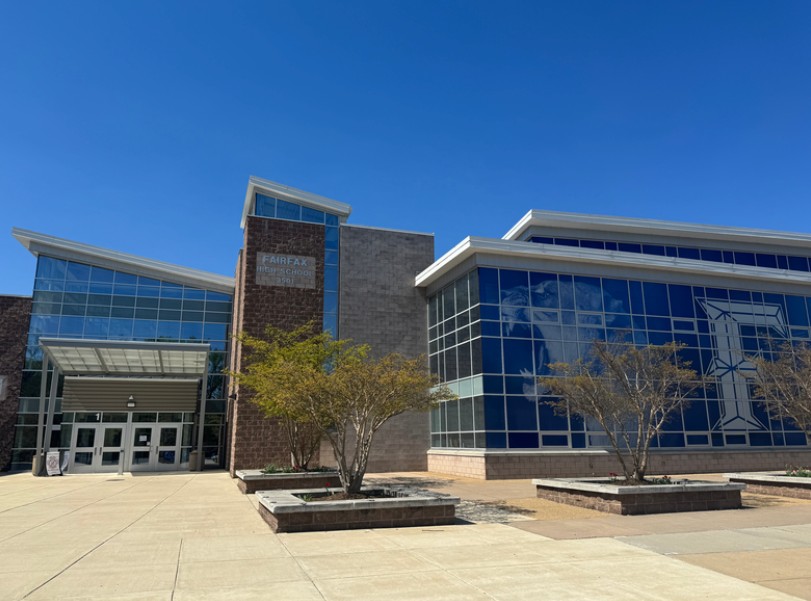
In Fairfax County and its towns and cities, local leaders are calculating the financial fallout. According to VACo, the spike reflects rising demand for data center infrastructure and shifting service costs hitting public entities at once. For Fairfax County and its public schools — the state’s largest school system — the rate hike hits a massive structural footprint, rippling across hundreds of municipal facilities, public safety centers, county offices, school campuses, and administrative buildings.
Smaller municipal operating budgets face immediate pressure to keep the lights on without delaying infrastructure projects. Brent Heavner, chief communications officer for the Town of Herndon, said the VEPGA rate will impact the Town’s electricity costs.
“Inflation and fluctuations in input costs affect the Town’s budget in much the same way as they impact businesses and households,” Heavner said. “Through our annual budget process, departments account for electricity costs alongside other operations and maintenance expenses.”
As for capital projects, Heavner said specific impacts “remain to be seen.” However, he noted the Town has been proactive through a multi-year energy initiative underway since last year. “These energy efficiency projects at Town facilities are anticipated to help reduce energy use beginning in FY 2027. We expect to estimate and budget these savings starting with the FY 2028 budget cycle.”
The City of Fairfax hopes to minimize the financial damage.
“The city is working to improve the energy efficiency of its buildings and has several cost saving measures that help keep costs down and will minimize these impacts,” Matthew Kaiser of the City of Fairfax said. “Adjustments will be made to minimize fiscal impacts.”
Kaiser added that Fairfax City’s new energy manager will focus on tracking and improving energy efficiency throughout the city. “The recently adopted Green Building Policy raises performance standards for municipal buildings. The energy manager will seek ways to optimize building performance starting this fall,” he said.
BY CONTRAST, residential rates are regulated by the SCC, which approved a residential base rate increase that took effect Jan. 1, 2026, adding roughly $11.24 per month to a typical homeowner’s bill.
The impact spans municipal boundaries because of how energy is purchased. While the Virginia Municipal League (VML) serves cities and towns and VACo serves counties, the two organizations pooled their collective bargaining power to create VEPGA. By combining forces, they represent over 170 entities — ensuring that counties, cities, towns, and school divisions all purchase under the same contract umbrella.
Looking ahead, VEPGA members are projected to face an additional 12% rate increase on July 1, 2027. Officials noted this projection assumes no further increases in fuel costs or riders, such as the Regional Greenhouse Gas Initiative (RGGI). The multiyear, stepped-increase strategy was deliberately designed to reduce immediate rate shock in the first year.