Our image of Barbie is likely that sleek, fashion-conscious, curvaceous, 11-½-inch doll with ruby red lips. But
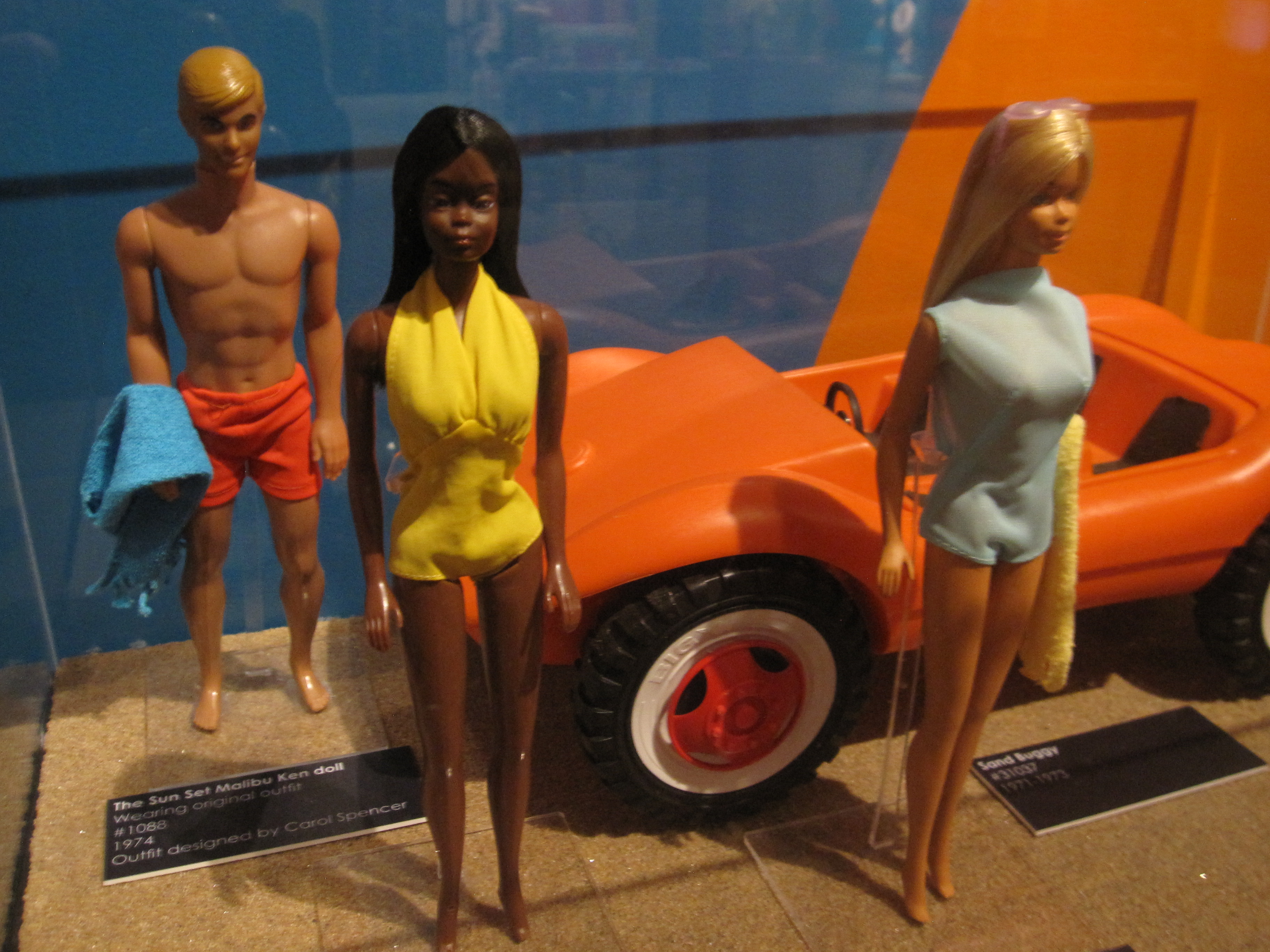 Beach Barbie
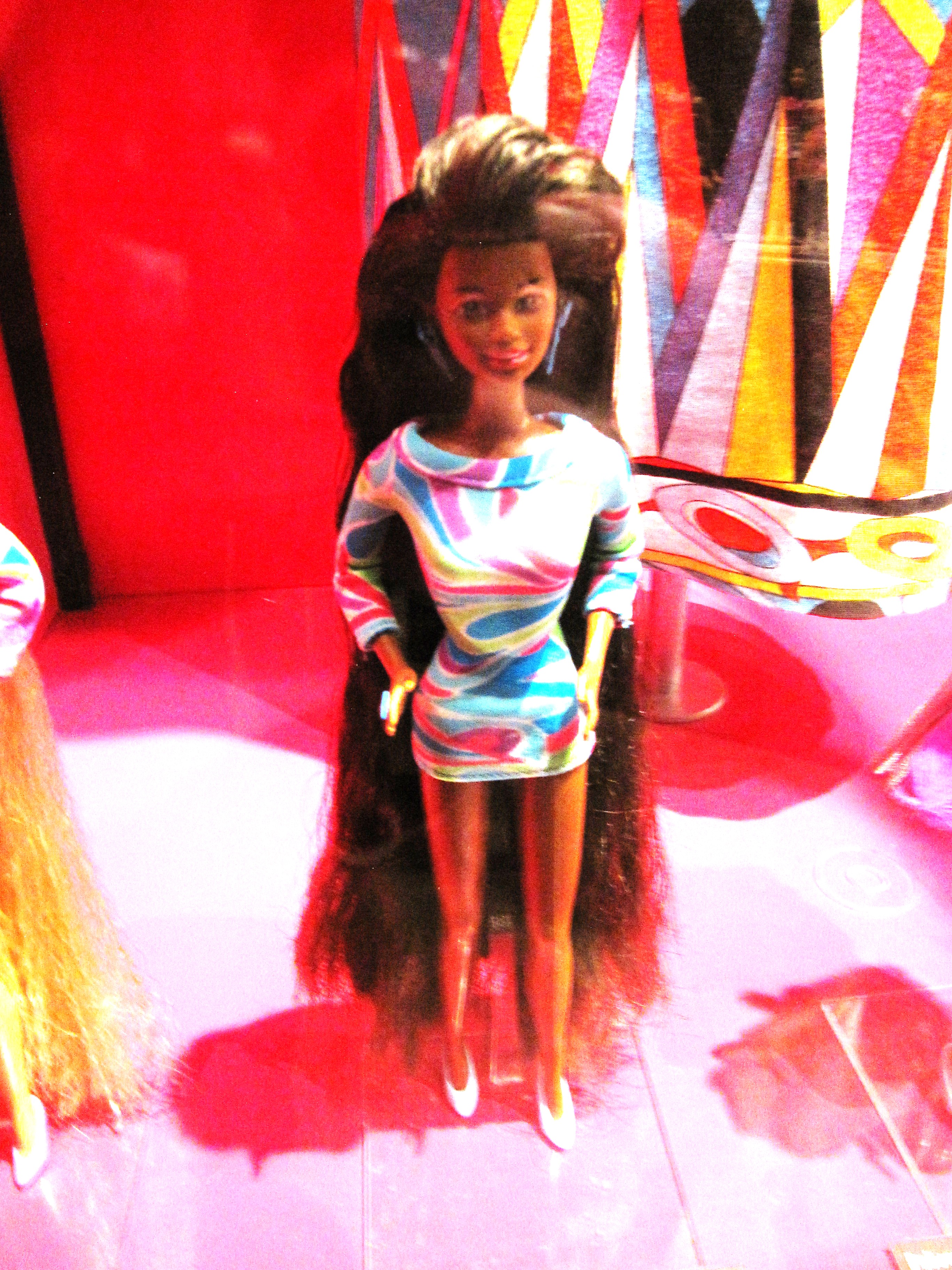
With over 250 Barbie dolls displayed amid bright pink walls and girl anthems resonating, the exhibit is a retrospective of social change. Visitors can see Barbie the athlete, the entertainer, the elected official, the doctor, the scientist, the astronaut and more. For 65 years, Barbie has evolved, today with nine body types, 35 skin tones, 52 hair colors and over 94 hairstyles.
Barbie’s creator, Ruth Handler, who co-founded Mattel, Inc., with her husband, Elliot, came up with Barbie after seeing that her daughter, Barbara, played with dolls focused on mothering and caregiving, while her son’s toys encouraged him to be a firefighter or doctor. “My whole philosophy of Barbie was that through the doll, the little girl could be anything she wanted to be. Barbie always represented the fact that a woman had choices,” Handler said.
Creating a Barbie requires a 10-member team, including fashion designers, makeup artists, hair stylists, sculptors, graphic and packaging designers and marketers. They also create her clothes and accessories, like miniature shoes, hats, purses, jewelry, athletic equipment and other accoutrements. A life-size replica of Barbie’s hot pink Corvette offers a tempting photo op.
Barbie over the Years
A pony-tailed Barbie debuted in 1959 at the New York Toy Fair wearing a black-and-white, zebra-striped swimsuit and white-rimmed sunglasses. In 1961, her boyfriend, Ken, showed up, and they frolicked in the California surf. In the 1960s, more workplace opportunities for women emerged and Barbie became a flight attendant and even Miss Astronaut in 1965, four years before man landed on the moon.
In 1968, Christie, a talking Black doll, hit the stores, Barbie’s friend. Hippies popularized denim, a fabric originally favored by working men, so Barbie donned tight blue jeans with flared bottoms, bib overalls and a denim bra and skirt.
With the feminist movement gaining steam in the 1970s, bolder Barbies wore groovy skirts – minis, midis and maxis. Mattel introduced multi-cultural Barbies and for the first time, her blue eyes faced forward. More jobs opened up and Barbie went to boardrooms and courthouses wearing power suits. One Barbie became a chief executive officer and donned a straight skirt and power pink blazer. The first Black Barbie and the first Hispanic Barbie emerged in 1980.
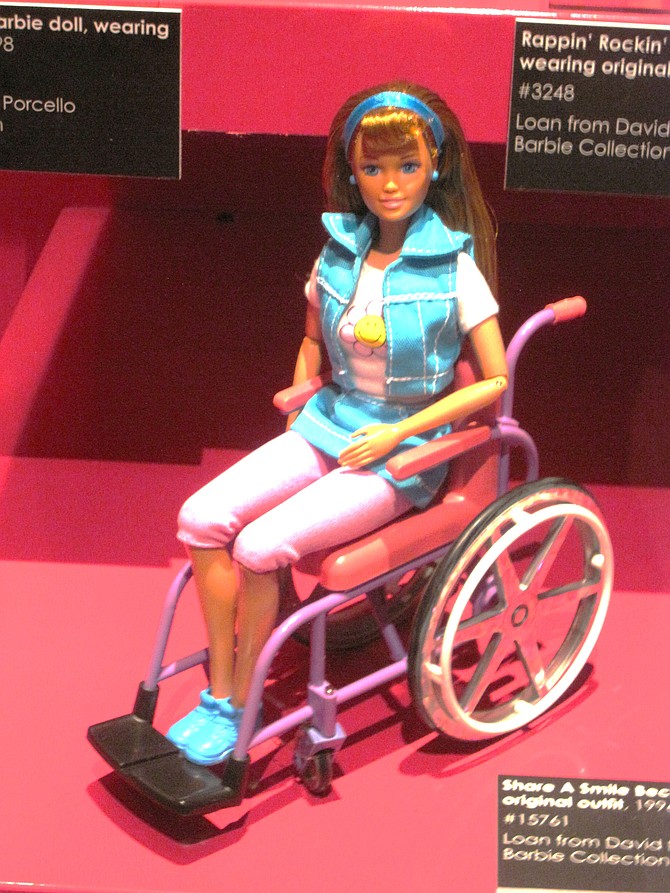
In the 1990s, voters elected three women to the U.S. Senate. Barbie followed suit and in 1992 a Barbie for President doll arrived. The Dr. Jane Goodall Barbie in 2022 ventured out with binoculars. In 1997, Mattel created Barbie’s friend with disabilities, Becky.
Barbie is the most diverse and inclusive doll line in the world, promoters tout.
A Virginia Angle
The exhibit spotlights several Barbie Virginians, including Katherine Johnson, a mathematician known as “the human computer” at NASA’s Langley Research Center. Also Norfolk-born singer Ella Fitzgerald, including the actual steel helmet she wore on World War II tours. There’s a George Washington Barbie and his actual silver shoe buckles are on loan from Mount Vernon.
"Barbie has always been more than a doll — she’s a snapshot of what people wore, what they imagined and what they believed was possible," said Elizabeth Klaczynski, curator of the exhibition. “This exhibition invites visitors to enjoy themselves and create memories, while experiencing how pop culture can serve as both an illuminating time capsule and a vivid magnifying glass.”
Wikipedia reports, “The original Barbie doll retailed for three dollars and her first range of clothes consisted of 22 ensembles priced at between $1 and $5 US dollars. Mattel designed Barbie to drive ongoing garment sales after the initial doll purchase.”
An online search shows that Barbies today cost from $14 to $44, with original vintage dolls priced in the hundreds. Mattel has sold over a billion Barbie dolls.
The exhibit closes on Jan. 18, 2027. Visit www.virginiahistory.org.