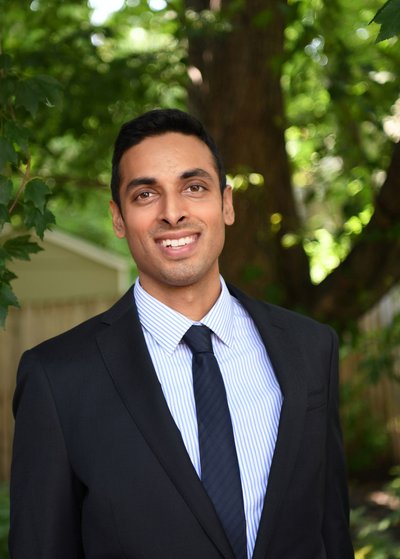
US Rep. Suhas Subramanyam (D)

Dave T. Beckwith ®
Did Not Reply
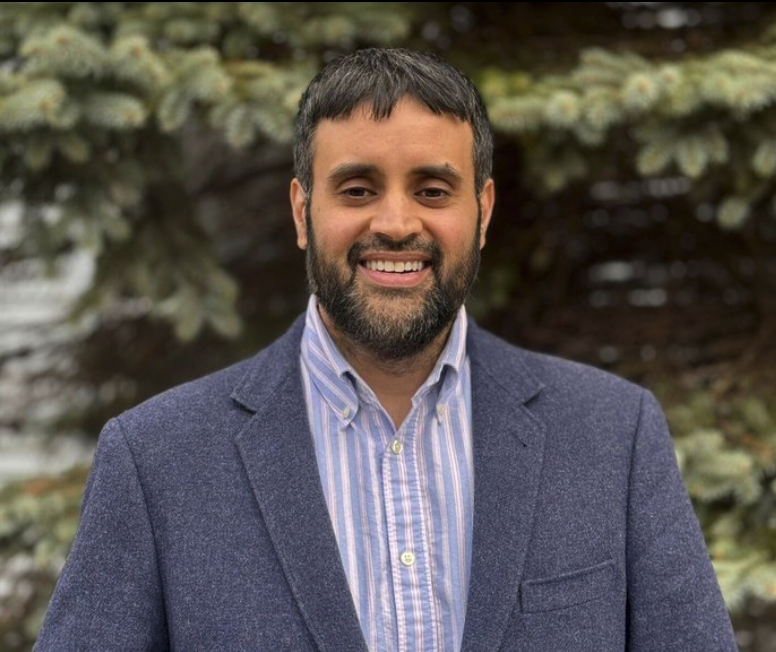
Ahsen Mujeeb Malik (I)
The Connection Newspapers invited candidates on the ballot for Virginia’s 10th Congressional District race — Democratic incumbent Suhas Subramanyam, Republican challenger Dave T. Beckwith who did not respond, and Independent challenger Ahsen Mujeeb Malik — to participate in our 2026 Voter Guide. We asked candidates about issues facing our region, including local housing affordability, transit infrastructure, federal job protections, and regional utility regulation. We capped responses at 500 words. Candidates appear in the official ballot order set by state election officials.
OUR QUESTIONNAIRE
Q1 Housing & Zoning: Under Department of Housing and Urban Development guidelines, housing is considered affordable when costs do not exceed 30 percent of income for families earning up to 80 percent of Area Median Income—including extremely low-income households earning at or below 30 percent of Area Median Income. Given that Virginia’s Dillon Rule restricts Fairfax County’s authority over local revenue and zoning mandates, how will you leverage federal housing grants, housing choice vouchers, federal tax credits, or federal land transfers to expand affordable housing in our district?
Q2 Transit & Infrastructure: Fairfax County relies heavily on federal partnerships to fund critical transportation networks. What specific federal infrastructure funding bills, transit grants for Metro, or United States Department of Transportation initiatives like Safe Streets and Roads for All will you champion to relieve traffic congestion and protect vulnerable road users?
Q3 Federal Workforce & Economy: Fairfax County’s economy relies heavily on tens of thousands of federal civil servants and contractors, whose spending sustains local small businesses and the regional job market. How will you protect federal workforce jobs and government contracting, and what strategies will you pursue to support Northern Virginia workers and industries impacted by economic shifts?
Q4 Energy Grid & Utility Rates: Following Governor Spanberger’s intervention before the State Corporation Commission regarding the proposed Dominion Energy–NextEra merger, and federal concerns over data center energy load and rising utility bills: What federal legislation or regulatory oversight will you pursue to protect Northern Virginia households from rising energy costs while supporting grid reliability?
RESPONSES
Candidates U.S. House of Representatives, 10th District
U.S. Rep. Suhas Subramanyam (D-10)
Q1 Housing & Zoning: The median age of a first time home-buyer in the U.S. is 40 years old. We need an all hands on deck approach to increase access to affordable housing in Fairfax County and Northern Virginia. In Congress, I introduced the bipartisan First Time Homebuyer Savings Opportunity Act to establish tax-free down payment savings accounts for eligible first time homebuyers.
I have championed legislation and pushed for federal funding to expand access to low-income housing tax credits, establish training programs for schools to develop residential construction industry training, support affordable housing production, veterans housing, and homelessness assistance grants. I have worked to secure federal funding for affordable housing projects in our district.
Q2 Transit & Infrastructure: Transportation and infrastructure are critical to Fairfax County and Northern Virginia. I have worked to secure $150 million for the Washington Metropolitan Area Transit Authority in federal spending legislation, and introduced legislation to address high private toll road pricing. I have secured funding for local transportation and infrastructure projects – ensuring that our roads are safe and free from congestion.
Q3 Federal Workforce & Economy: On the Oversight Committee, I am committed to standing up for our community’s federal workers and contractors. Since the start of President Trump’s second term and the launch of DOGE, I have pushed for legislation to raise wages for federal workers, reinstate fired probationary employees with backpay, prevent the political firings of federal workers, and support federal workers and contractors during government shutdowns. Additionally, I have introduced legislation to hold DOGE accountable and prevent reckless agency relocations out of the DMV. I have offered amendments to legislation to strip anti-federal employee federal provisions from legislation, including H.R. 1, which were eventually removed.
Q4 Energy Grid & Utility Rates:
We need to continue to speak out against the Dominion Energy-NextEra merger. I am extremely concerned about the impacts on ratepayers. Since getting elected to the Virginia General Assembly in 2019, I have taken on monopoly utility companies, securing over $300 million in refunds to ratepayers, and introduced legislation to ensure that ratepayers didn’t foot the bill for data center’s power needs. Now in Congress, I am calling for a local moratorium for data centers in our community and the establishment of a national data center siting plan to ensure that we don’t continue to put all of the country’s data centers in one place.
______________________
Dave T. Beckwith (Republican)
Did not reply.
__________________________
Ahsen Mujeeb Malik (Independent)
Q1 Housing & Zoning: Housing affordability is indeed a great crisis for our country. However, I would approach the problem differently by building on the recently enacted 21st Century ROAD to Housing Act, which took an important step by encouraging local zoning reform. I would push for a bill with a “Zero-Zero” incentive: developers in localities that bring their zoning in line with federal standards would become eligible for 0% construction loans, and buyers of the resulting homes would be eligible for 0% mortgages. The funding would come from a public-private equity partnership. Developers would share excess profits and buyers would sign over a share of the home's future appreciation, rather than the federal government writing a check. A program like this would create real pressure on Richmond to loosen the Dillon Rule's grip on local zoning authority, because Virginia localities that don't reform would simply watch this opportunity go to counties in other states that do.
Q2 Transit & Infrastructure: I will fight to pass the BUILD America 250 Act, the bipartisan surface transportation reauthorization that would provide five years of stable funding for roads, bridges, transit, and rail, while extending the federal government’s $150 million annual capital contribution to WMATA through FY2031. I also support reauthorizing and fully funding the FTA’s Capital Investment Grant program, which is critical to major transit expansion projects across Northern Virginia. Given that the federal government is one of the largest employers in this region, our communities deserve their fair share of federal transportation investment.
Q3 Federal Workforce & Economy: The federal workforce is integral not just to Fairfax County's economy, but to the functioning of our entire country. Our nation cannot operate without the hard work of our dedicated civil servants. But this is a mutually beneficial arrangement, not an entitlement. Government contracting can't be "protected" in the abstract unless there's a legitimate public need behind it. Continuing contracts that no longer serve the public interest is a form of corruption.
I will fight hard for equitable treatment for workers affected by upcoming shifts and utilize any appropriate federal tools that could assist in the future diversification of Northern Virginia’s economy. I also encourage local business leaders to collaborate with state and local legislators on strategies to diversify the region's economy, ensuring that a downturn in any single industry does not have an outsized effect on Northern Virginia's economic stability.
Q4 Energy Grid & Utility Rates: Gov. Spanberger was right to intervene in the Dominion-NextEra merger and push the principle that data centers, not ratepayers, should pay for their own grid infrastructure. The GRID Act (Hawley, Blumenthal) would require large data centers to source their power off the public grid or face steep penalties, while the GRID Savings Act (Heinrich) would require large electricity users like data centers to pay for the new transmission and generation capacity built to serve them. I support incorporating initiatives like these into a bipartisan bill that equitably manages the negative externalities of data center construction.