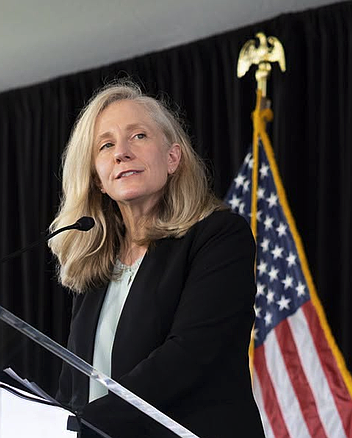
Virginia Gov. Abigail Spanberger at an economic expansion event in Halifax County, Va., Monday, June 29. That same day, the commonwealth's $207 billion biennium budget was enacted into law, featuring a first-of-its-kind statewide energy consumption tax on data centers projected to generate $600 million in annual revenue. Photo via Facebook/Office of the Governor
Virginia’s $207 billion, two-year state budget automatically became law Monday after the General Assembly accepted all 14 of Gov. Abigail Spanberger’s proposed amendments, locking in a final spending plan ahead of a Tuesday 11:59 p.m. deadline to avert a government shutdown.
Because lawmakers voted to adopt the governor's exact package of structural changes, the budget bypassed the need for a final executive signature. The tallies concluded a legislative process, with votes on the amendments ranging up to 23-16 in the Senate and 71-22 in the House of Delegates.
“Today, by finalizing our budget, Virginia is charting a path toward a stronger, more secure, and more affordable future for every family who calls our Commonwealth home," Spanberger said in a statement. "This budget reflects our shared commitment to strengthening Virginia schools, expanding economic opportunity, and addressing the affordability crisis created by reckless policies out of Washington — all while contending with President Trump’s disastrous cuts to healthcare."
She added that with "historic investments in education, four percent raises for our teachers, and landmark funding to help families manage the rising cost of childcare, we are making real strides to uplift every student, listen to parents, support educators, and prepare communities for long‑term success.”
The bipartisan votes concluded a months-long standoff within the General Assembly's Democratic majority over how to regulate the state's booming tech sector. Some lawmakers sought to eliminate existing tax breaks to force data centers to contribute more to state revenue; others expressed concern that aggressive taxation could drive the industry out of Virginia.
Lawmakers compromised by preserving the industry incentives while introducing a new energy consumption tax of 1.1 cents per kilowatt-hour on data centers. The tax is projected to generate up to $600 million annually, totaling $1.2 billion over the two-year budget cycle, to fund core state services.
"This institutes a statewide energy consumption tax on data centers to ensure this industry pays its fair share and does not drive up costs for Virginia families," Spanberger said prior to the vote.
While the new data center tax revenue will be largely generated by tech facilities concentrated in Loudoun and Prince William counties, the final budget redirects a portion of those funds to help jurisdictions absorb the costs of regional growth. The revenue is slated in part to help close transit deficits in Arlington County and the City of Alexandria, while addressing budget shortfalls for Fairfax County Public Schools and the Washington Metropolitan Area Transit Authority.
Beyond local transit and schools, the final spending plan funds broader statewide initiatives, including residential utility bill credits and a new $2 million annual grant program to provide life-saving cancer screenings for Virginia firefighters.
While the bulk of that new revenue serves the wider state general fund, top regional lawmakers emphasized the significance of the technological compromise.
“I think we went through a lot to get here, but at the end of the day, data centers are going to contribute about $1.2 billion over the biennium to help fund our government,” said Senate Majority Leader Scott Surovell, D-Fairfax, who represents a portion of Fairfax County.
“The noise issues are some of the things we hear the most from people that live next to data centers.”
— Sen. Scott Surovell
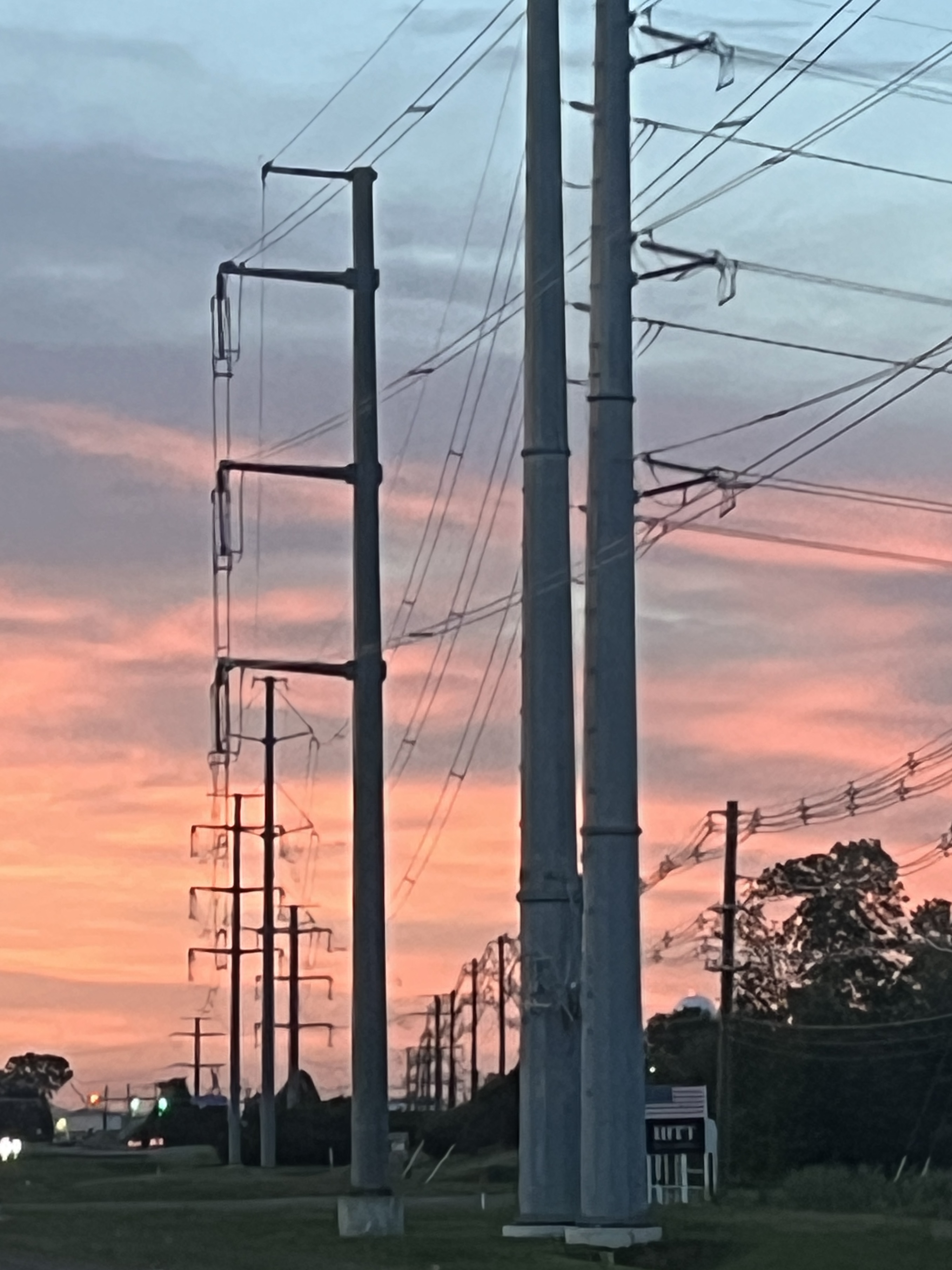
6 ways new budget impacts Northern Virginia.
The finalized state budget package includes six key budget provisions specifically designed to protect Northern Virginia’s local infrastructure and shield suburban residents from rising regional expenses. Under the funding framework, three targeted provisions shift major utility infrastructure costs and regulatory enforcement actions onto tech industry data centers. The remaining three measures secure immediate funding mechanisms to stabilize regional transit systems, support local public school budgets, and deliver direct household utility relief across Fairfax, Arlington and Alexandria.
High-Demand Ratepayer Grid Insulation
House Bill 1393 protections require the State Corporation Commission (SCC) to separate utility infrastructure costs, forcing data centers drawing 25 megawatts or more to foot the bill for their grid expansions rather than letting transmission fee costs spike residential bills. Senate Majority Leader Scott Surovell, D-34, said during the April reconvened session that there were “efforts afoot in the General Assembly … to ensure that data centers are paying their fair share, as I think everyone broadly agrees is necessary.”
Environmental Sound Assessments and Local DEQ Noise Regulations
Environmental Sound Assessments and Local DEQ Noise Regulations command the Department of Environmental Quality, known as the DEQ, to establish strict acoustic baseline rules for cooling systems, providing a regulatory framework for residential subdivisions adjacent to commercial zoning (via HB 153 / SB 553). The provision mandates standardized noise tracking. Surovell highlighted during a February committee hearing why these protections were fast-tracked: “The noise issues are some of the things we hear the most from people that live next to data centers.”
Data Center Water Scarcity Mitigation and Closed-Loop Mandates
Data Center Water Scarcity Mitigation and Closed-Loop Mandates direct the DEQ to establish strict groundwater protection rules, requiring future data center developments to use closed-loop air cooling or 100 percent recycled stormwater rather than depleting local municipal water reserves. The provision establishes a formal review timeline to designate "cooling water scarcity areas" across the state, a measure heavily pushed by inner-Northern Virginia representatives to prevent industrial water consumption from compromising localized utility infrastructure.
WMATA Operating Lifeline
The final budget package secures $153 million to fully fund Virginia's share of the WMATA regional operating subsidy, preventing service cuts or fare hikes across the Orange, Silver, Blue, and Yellow lines. Championed by House Finance Chair Del. Vivian Watts, this funding matches the target recommended by the SJ 28 Joint Subcommittee on Public Transit to protect daily core commuters. Rather than establishing a permanent new tax stream, the legislative compromise prevents a looming fiscal challenge through an ongoing funding model that combines targeted state appropriations, existing regional transportation allocations, and temporary legislative waivers on WMATA's statutory 3% operating growth cap.
Local Sales Tax Authority for School Construction
Expanded Local Sales Tax Authority for School Construction grants jurisdictions the authority to place a voter referendum on the ballot for a 1 percent retail sales tax dedicated exclusively to school modernization, bypassing traditional property tax hikes. The provision incorporates Senate Bill 66, championed by Northern Virginia Senators Jeremy McPike, D-Prince William; Jennifer Boysko, D-Fairfax; and Barbara Favola, D-Arlington. Co-sponsor Favola noted during the legislative session that with the average age of Virginia school buildings hitting 50 years, homeowners can no longer bear infrastructure burdens alone.
Utility Meter Ratepayer Carbon Rebates
The Utility Meter Ratepayer Carbon Rebates provision mandates nearly half of all state carbon auction funds to be distributed directly back onto residential and small-business electric bills to mitigate regional capacity costs. The mechanism allocates 45 percent of Regional Greenhouse Gas Initiative proceeds back to consumers.
House Appropriations Committee Chair Luke Torian, D-Prince William, spoke about the compromise following the final budget votes. “When the two bodies get together and have meaningful conversations, we can make some very good decisions.”